Friday, February 24, 2023

CHANGES !


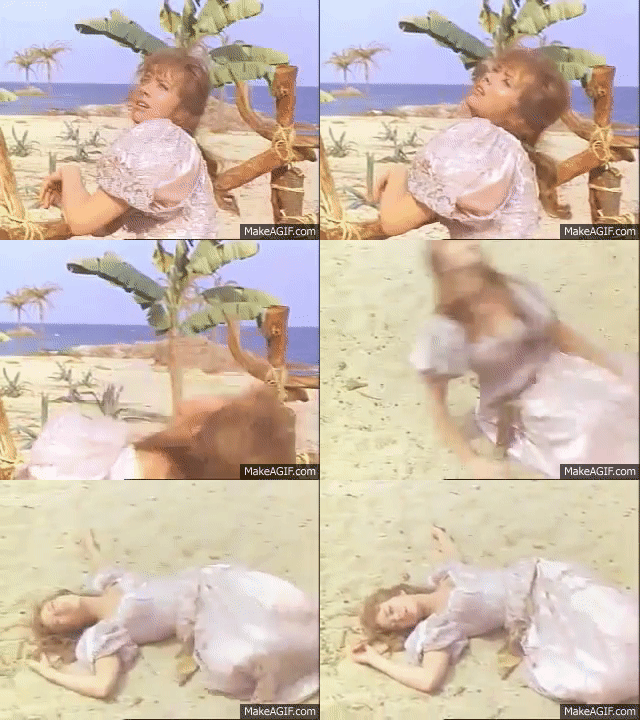
    I've come into some issues with what I had planned so far. First, after getting advice, I realized the actual difficulty of making underwater scenes beyond what I was capable to do with a camera. It also raised question on safety, which is the most important part. After that, I was advice to focus more on the other parts of the story and not so much on the drowning. Even if that is what led me to come up with my story line. And last... well, I realized that scenes on the beach would prove very difficult given the time of year, and the unbearable heat.

gif

    Thankfully my problems have solutions, and they all narrow to changing bits of the storyline. First, I decided to change the location to a park/woods as it is easier to film there. Of course, the hazardous drowning scenes wouldn't take place either. The same premise of the story will remain, changing a few shots to fit the setting. Overall, I think the issues I've faced were easy to resolve, especially with guidance on how to tackle them. I'm excited to keep working!

Thursday, February 23, 2023

THE OUTLINE!!


    The outline for my film opening is...well there is no lining in it. It's more of a brain dump of how I want the story to develop. And a guide to how to construct my storyboard. I'm also unsure on how to end the film opening, but I'll have to ask from my peers and instructor's advice for sure.

    Here's a screenshot of the outline I have for my film opening:


    What I’ve been conflicted about is the ending. I’m not sure if I should leave it like I have it on my outline, or include an scene in the funeral to explain further. Let me explain, the film opening shows character #1’s death how character #2 remembers it. Character #1’s death is claimed an accident, as it would be revealed in the eulogy. But character #2 would question this as they are friends and she knows how her friend was a good swimmer. I’m just not sure on how to reveal the last part, through conversation or the eulogy.

Wednesday, February 22, 2023

WAIT…WHO’S WATCHING THIS AGAIN?


    My incentive to think about who will be watching my film opening came about as my sister told me the would never watch a movie like my film opening. She didn’t mean it in a bad way. It’s just because she's scared of everything even at her 20 years living on this earth. But it did make me question who will be my film opening targeted towards?

    The audience for it would probably remain between adults and older teens of any gender. The thrilling experience geared towards viewers that want to engage in a cinematic experience, focusing on the suspense and mystery of it. Trying to figure out the plot’s twist and turns will probably attract people who enjoy crime dramas and horror. The thriller genre usually also appeals to audiences who want to explore complex morality and ethical issues. Definitely the thriller genre is not for people who enjoy lighthearted fun to watch, or to people who are literally scared of the word earthquake like my sister.

Tuesday, February 21, 2023

THE TECHNICAL ELEMENTS OF THRILLER


    So, the thriller genre has a need to create suspense and tension to the audience. To do this, the technical elements help develop the story beyond the script. The cinematography, editing, and sound design are the three elements I’ll be relying on apart from writing the story. 

    The cinematography is one of the most important elements, as everything seen on the screen matter. Some techniques I will incorporate on my short opening are tight framing, which creates a sense of intimacy and claustrophobia. Which I think would be a great way to transmit the feeling of drowning beyond the acting. The lighting is also an important element in my film opening, as there will be scenes with low lighting and others with bright lighting. The former to convey mystery and danger, and the latter to convey a false sense of security. Those are just some ways the cinematography will help me with my film opening, but there are way more details to the cinematography.


    Continuing on, the editing of it bring a lot into how the thrill translate to the audience. This is especially relevant on how I will be using jump cutting. Jump cuts are supposed to jumo abruptly from shot to shot. Which will help me create a sense of disorientation, and unbalance. But more importantly, I will help me demonstrate how the chain of events in one of the main characters is missing something from how she remembers the chain of events. Cross-cutting will also be super important in the editing progress. Creating tension between what is happening to the two different characters in my film opening.


    Those are just the main two technical elements of the thriller genre my film opening will be relying on. As, of course, there are mire like sound, set design, writing, etc.

Friday, February 17, 2023

EVERY MOVIE NEEDS AN AESTHETIC


    I have a clear idea of what I want to do with my film opening scene now. I haven't gotten to storyboarding or writing the script, but I do know how I want my opening scene's aesthetic to look like. Which, being honest, is my favorite parts of the pre-production process.

    My film opening will consist of two different color palettes, given that it is from the point of view of one of the two main characters. This is because there is a life-turning point for that character, which is what the film opening will cover. So to make it easier to understand for now, I named this two different points for the character/film opening as before and after:


    Most of my film opening will take place at the beach, and just the last scenes of it could be identify as the "after." But, even it is for a short time, the change in tone there will be is still significant.


Thursday, February 16, 2023

LITTLE TIME AND A LOT TO TELL


    Upon researching the genre of thriller and having an idea of what my film opening will be composed of, I realized that the idea I had stormed in my brain might be too much to tell in two minutes. I don't want to divulge too much before having anything set in stone yet. But, the original storyline my opening scene involved too many "emotional" scenes in a short amount of time. Not only would it be tiresome to see, now that I think about it. But I, nor anyone I know, have the capabilities to give a good performances that wouldn't look goofy on camera.

    My solution was to go back to the root of the genre, and actually think of this project as just the opening of my movie. I closed my mind to what the rest of the movie, the endings and the plot twists would look like. Upon my research I came across this article that talked about the anatomy of a thriller, although it touches upon writing it I still found the advice useful. Explaining the three C's all thriller were composed of, I realized how I just needed to focus on the first C, the contract. 

"The contract, an implied promise you make to the reader about what will be delivered by the end of the book. It’s crucial to keep every single promise you make, no matter how trivial."

    With this I learned I needed to make my film opening about the ending of the film, without giving away the mystery of it. It made things simpler, now knowing I didn't need to cram everything into two minutes but I would just need two scenes of all the ones I had brewed at the beginning. I needed the tragedy and the mystery.

Wednesday, February 15, 2023

RESEARCH INTO THE THRILLER GENRE


    While researching the genre of thriller, I realized how many sub-genres it has. From mystery to romance and religious, they all have one defining trait that allows them to be a sub-genre of thriller. They all draw out the feeling of thrills. In the article that helped me dive into this genre, a quote from James Patterson was quoted, and it really gave me clarity not only in the thriller genre but on how I would approach my own film opening scene:

"What gives the variety of thrillers a common ground is the intensity of emotions they create, particularly those of apprehension and exhilaration, of excitement and breathlessness, all designed to generate that all-important thrill. By definition, if a thriller doesn't thrill, it's not doing its job."

     This quote made me understand what needed to be my entire focus if I wanted my film opening scene, surrounding a drowning of a girl to work. I needed to build on the moment. It's advice I've received before when working on my own projects, but it wasn't until now that I realized how important it was for the specific genre of thriller. Staying in the moment allows the audience to make assumptions, to fill in the blanks left on purpose when building the suspense because they just can't wait for the shoe to drop. 

    So with this research I learned how the thrill comes from the unpredictability of the scene. I have to show what is happening enough for the audience to care, but not enough to answer all their questions and maintain the sense of uncertain tension.

Tuesday, February 14, 2023

PICKING A GENRE


    Picking a genre for this project has been hard. Mostly because there's so many opportunities and ideas of what I could do that I get overwhelmed. But, looking at iconic movie scene openings, like the one from Jaws (1975) reminded me of my own personal experiences in the ocean, or more especially, drowning.


    Inspired from Spielberg's Jaws, I knew I wanted my film opening scene to feature one. Not only are they easy to film, having the right equipment, but they also open doors for lots of different shots for me to experiment with. Shots like close ups, low angles from under the water, long shots from the shore. It will definitely be a challenge, given my budget and lack of experience, but I'm up for it if it means learning in the process. 

    Knowing a little of what I wanted my film opening scene to look like, even if I still lack a detailed plan, I decided on the genre of thriller. Even more inspired by Spielberg, I also want to experiment and learn more about what audio can bring into a scene. With thriller, audio can give the same scene completely different meaning and feeling, as building the suspense is an important factor to making a good thriller film. So, I need to research the thriller genre and what elements either make it or break it so I can create my film opening.

Stay tuned!

Friday, February 10, 2023

THE BEGINNING OF A JOURNEY!


    In 9 weeks, I will need to turn in my final project for this class. I would like to say I am not nervous, but I am totally already feeling the pressure of everything that needs to get done. But I can't say that I'm not excited to do this. The challenge, as terrifying as it is, is kind of exciting. So knowing myself, I will need to set myself a schedule if I want to stay on track. 

WEEK 1:

  • Brainstorm
  • Planning

  • 1 blog post

WEEK 2:

  • Genre

  • Research

  • 4 blog post

WEEK 3:

  • Continue research

  • Outline 

  • 4 blog post

WEEK4:

  • Storyboard 

  • Script 

  • Plan shooting

  • 3 blog post

WEEK 5:

  • Shoot! 

  • Research editing, sound, etc

  • 3 blog post

WEEK 6:

  • Edit !

  • Edit !

  • And edit !

  • 3 blog post

WEEK 7:

  • Shoot CCR

  • Edit CCR

  • 3 blog post

WEEK 8:

  • Get details done

  • Finish anything needed last minute

  • ⅔ blog post

WEEK 9:

  • Ccr post !
  • Vieo post!


    Hopefully I am able to follow my schedule. The idea of it is to let me focus on one thing each week and not get overwhelmed by anything. There's a lot of research, planning, shooting, and post-production to get done and the best way to go at it is by compartmentalizing the work load. If anything comes up, I did give myself the last week with nothing specific in case something got set back.

Saturday, January 28, 2023

Tuesday, November 1, 2022

THE ROMANCE/DRAMA GENRE


ROMANCE/DRAMA, AS A GENRE:

            The romance/drama genre is a sub-genre of romance which deep dives into the emotional and complex side of a relationship. As the story revolves around a couples and the obstacles they face together, the conflicting emotions while facing them are explored in a profound way that other sub-genres of romance wouldn't touch upon. Most times, the goal of the film is to engulf the viewer into the story and generate an emotional impact. The viewer is supposed to empathize with both side of the story, beyond their mistakes and wrongdoings to one another, romance/dramas are here to show the complexity of characters and relationships.


WHAT MAKES A ROMANTIC DRAMA?


    CONTENT.

            A love story or the pursuit of it, is the main focus of romantic drama films. In this specific sub-genre, the viewer is taken through the trial the couple faces together. From illnesses, finances, infidelity, status in society (racial or social), or the everyday life that strains the passionate love between the two main characters.

            Given the harsh situations the characters face, romantic dramas don't start from exhibiting the complexity of its characters. In most films, if the narrative wasn't intended to make the viewer understand the main characters, it would be difficult to sympathize as they make mistakes along the way. Taking the complexity of each individual main character, the convoluted dynamic between the two and their relationship pushes forward the story.

    PRODUCTION.

            Romantic drama films, as they revolve around its characters, focuses on the simplicity of telling a story in its rawest form rather than heavy post-production elements. Although sound, color, and dialogue are key production elements used throughout most films in this genre.

            Raising emotion out of the viewer, as well as properly showcasing the character's emotions, is a goal set by romance/drama films. Sound is incorporated in a few different ways to achieve this, as non-diegetic sounds helps build the tone and emotional. Voiceovers are used often in this genre, as a way to thoroughly explain a character's emotion or story when the dialogue falls short. Also, music is usually incorporated as another way to demonstrate the character's unspoken emotions.

            Undeniably, the dialogue of a romantic drama is what ultimately make or breaks the film. This makes the script what can be considered the most important part of the production of a romance/drama. Having the film be so reliant on the story of the main characters, and not of an epic adventure or action sequences, their interactions between each other and outside world is essential. Building the character, their flaws and tributes sets the path for showing their complexity in themselves as well as a part of a relationship.


HOW IS IT MARKETED?


            The target audience for films in this genre usually range between 13 years old to 40 year old women. This happens to be because the performance of the heavily emotional movies relies on the audience's willingness to get absorb by it. Men, on the most part, tend to stray away from films with emotional pull. In the contrary, young women are deliberately drawn to it. Although this doesn't exclude men from enjoying it, the movie is still produced to appeal the targeted age and gender. That being said, romantic dramas are marketed through social media, trailers, and advertisements. In recent years, social media has taken the lead in this because of the easy way to reach the audience. The posters and campaign are typically showing the couple which the film revolves around, either hinting the upcoming trial they are to face or simply showing a heartfelt moment that turns to be a staple of the film.


FILMS TO CONSIDER:


    THE NOTEBOOK (2004)

            The Notebook is a 2004 film directed by Nick Cassavetes, based on the novel of the same name by Nicolas Sparks, follows the story of Noah (Ryan Gosling) a poor but passionate young man that fall in love at first sight with the rich and beautiful Allie (Rachel McAdams). As it dives into their story, the turbulence of their relation centers the story, as their different socio-economic status forces them apart for years before reuniting once again. The first thing to notice is how the story of a young Allie and Noah is being narrated by an epistolary voice, as an older version of Noah recounts their love story to an older Allie from her own notebook, given that she suffers from Alzheimer's disease. The film idealizes the moments not only following the couple in their early years, but also at the end of the movie. Achieved through the lighting and colors, seeming bright and alive throughout the film, and at the end the hospital seems to resembles heaven more than an elders facility as the couple dies together. The symbolism of the house and what it represents to the main characters doesn't go unnoticed. The literal building of their home that went from an abandoned place to Allie's dream house parallels the couple building their life towards each other. For last, the movie poster captures Allie and Noah kissing under the rain when they finally make the decision to be together. Placing a staple moment of the movie as the selling point, and showing the yearning of the characters for each other.

OTHER FILM RECOMMENDATIONS:

            Pride & Prejudice (2005)

            Brokeback Mountain (2006)

            Portrait of a Lady on Fire (2019)

            If Beale Street Could Talk (2018)

            Marriage Story (2019)

            Casablanca (1943)

FILM OPENING

       FILM OPENING - GONE           IT'S DONE! (thank god)